

Nature Communications · 2025


seRNAs contain an antisense domain that matches to an RNA marker expressed in diseased cells.
In a cell that does not carry the marker, nothing happens. The construct stays silent and is cleared within hours.
In a cell that does, the sensor binds its target. The cell degrades the resulting double strand, the block on the expression element falls away, and the effector is produced – in that cell only.
Because sensor and effector are separate modules, the same architecture can eliminate a cancer cell, reprogram a fibrotic one, or deplete a defined immune cell class.




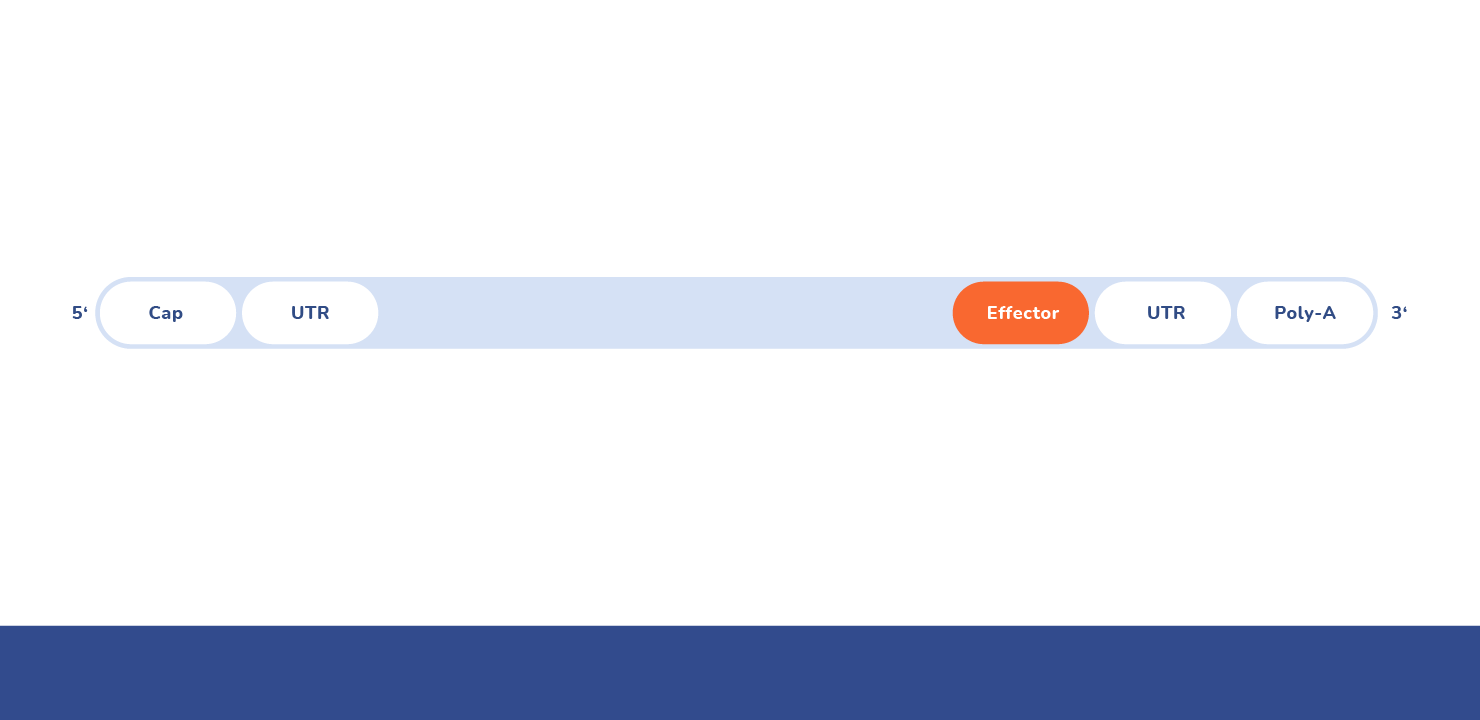
seRNAs have a modular design. Each module is performing its conserved function.
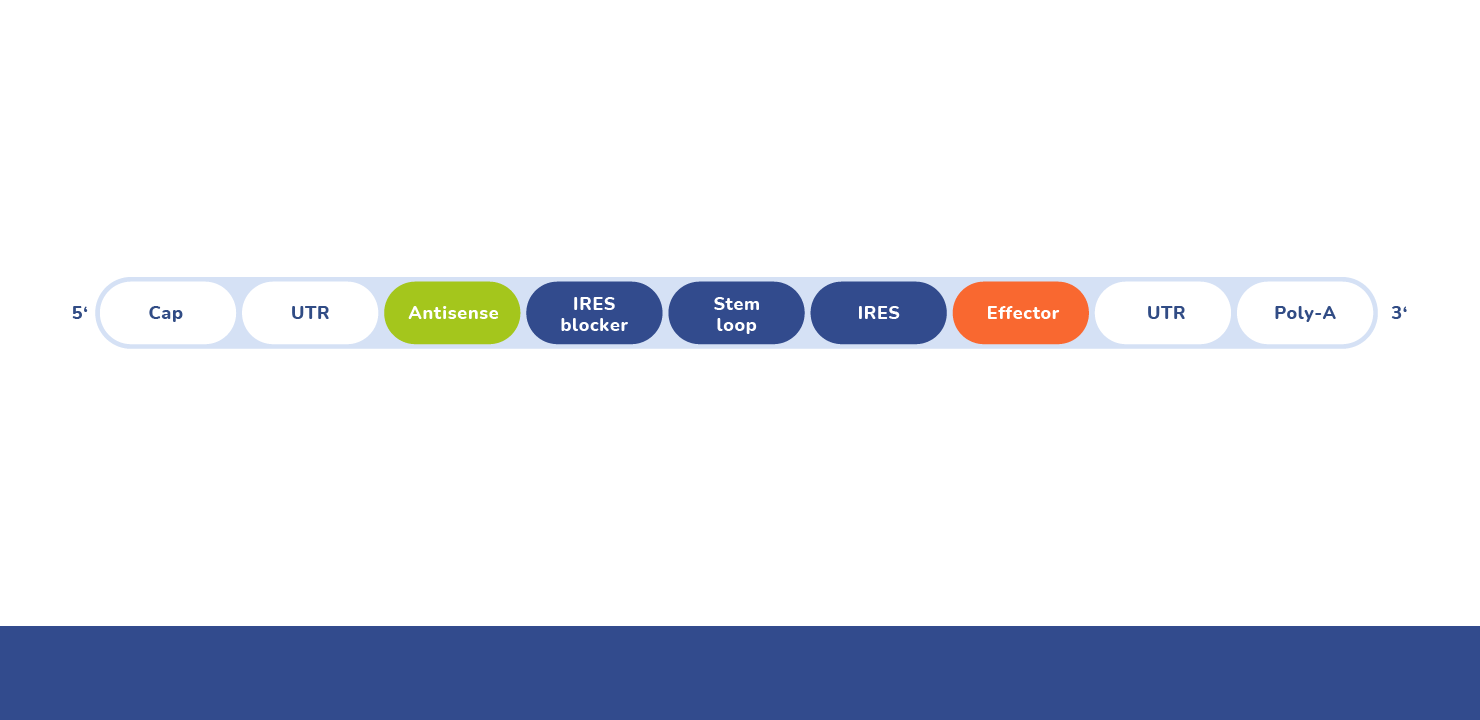
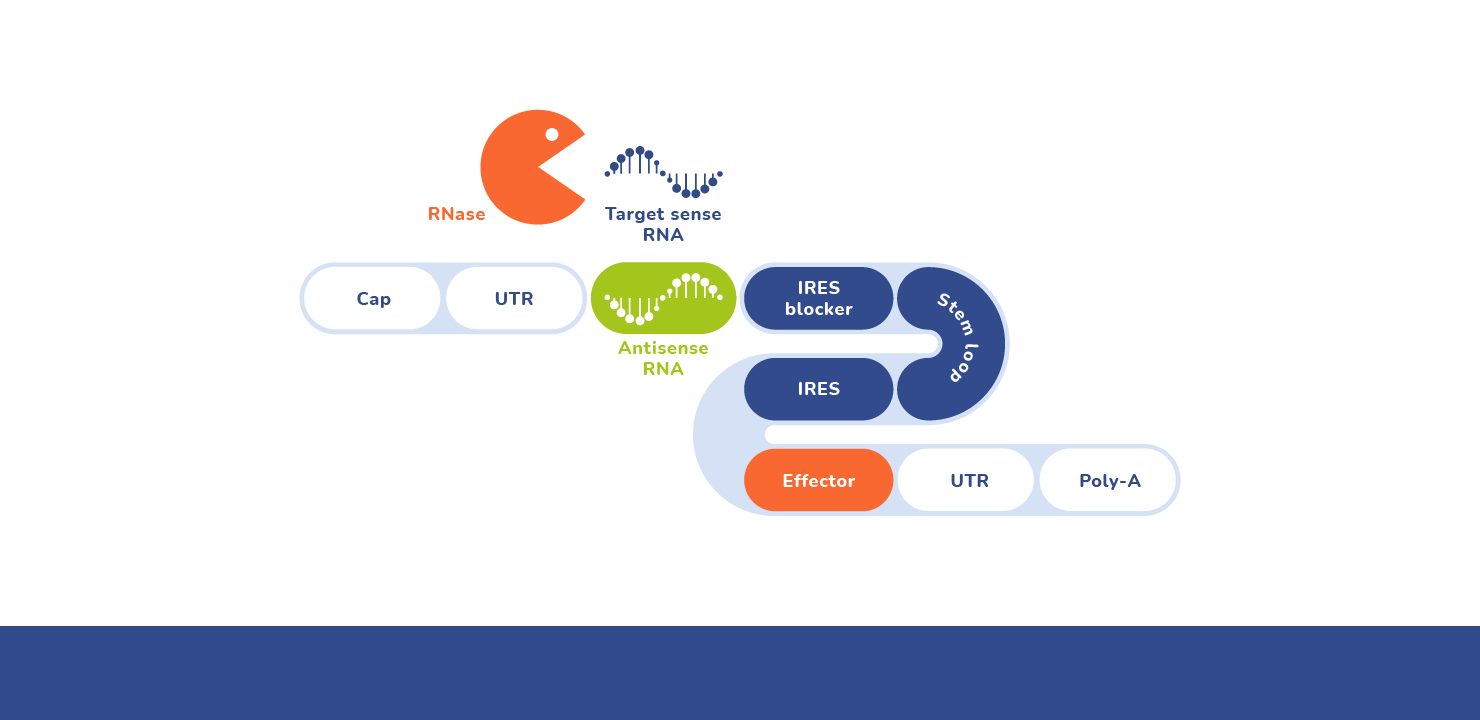
This gating is what makes the construct silent by default – and it is the part most comparable approaches do not have.
Most lipid nanoparticles are taken up into endosomes, where much of their cargo is degraded before it can act. Our fusogenic LNPs merge with the cell membrane instead and release seRNA directly into the cytosol. Formulation is straightforward, and particle composition sets which organ the dose reaches – hepatic and extrahepatic.